Saturday, 16 March 2019
Thursday, 7 March 2019
Es'hailsat 2 decoding using just a funcube dongle and your existing sky dish feed
@amsatdl #amsat #Eshail2 just a sdr plugged into existing sky dish not moved just standard. Proof of concept @AmsatUK @amsat @qo100_sat pic.twitter.com/DEWfVZYG9M— Arow Antena (@arrowantenna) March 7, 2019
I installed sdrsharp on my laptop, tuned to around 739MHz.
I took one of the existing sky tv connections from the back of the sky box and gently inserted the core and held the edge of the connector to that of the funcube or airspy dongle for best (temporary) connection.
You can clearly see the signal is floating up and down, it's not stable, but you can easily understand and track the qso.
For those wanting to just have a quick go as proof of concept, this requires little to no skill or additional equipment. any sdr dongle will do. The better you can get the connector attached to the dongle the better the signal!
The 739 MHz is what the LNB Local oscillator creates and should be your starting point on the sdr frequency, you will need to tune up and down and find the top and bottom beacons.
Wednesday, 6 March 2019
Tuesday, 5 March 2019
ISS School contact with Ceip Nuestra Señora Del Carmen, Torre De La Reina, Spain on March 5 at 09:50 UTC
My audio copy of ISS-Astro David St-Jacques OR4ISS talking to Ceip Nuestra Senora Del Carmen, Torre De La Reina, Spain via EG7NSC heard on 8-deg pass over Staines IO91SK at 09:50 UTC
You can hear my recording here with just a white stick X-50 antenna
slightly longer example much better set up from Dave Boult take a listen here
An International Space Station school contact has been planned with participants at Ceip Nuestra Señora Del Carmen, Torre De La Reina, Spain on 05 Mar. The event is scheduled to begin at approximately 09:50 UTC. The duration of the contact is approximately 9 minutes and 30 seconds. The contact will be direct between OR4ISS and EG7NSC. The contact should be audible over Spain and adjacent areas. Interested parties are invited to listen in on the 145.80 MHz downlink. The contact is expected to be conducted in English.
Torre de la Reina is located south of the main population center of Guillena (Sevilla) about 2 kilometers from it and is about 19 meters above sea level. It is also just 17 kilometers from Seville capital if you take the direction to the south on the A-431 road, also enjoying a strategic location privileged to be located very close to the A-66 (Autovía de la Plata) that connects Sevilla capital with Extremadura. Our school is located in the town of Torre de la Reina, (Seville, Spain), with 215 students, including children and primary school. It has two buildings, one of the infantile stage (recent construction) and another one of primary (something older). The staff consists of 15 teachers. We are a small center, but with a young staff, willing to invest in experiences of all kinds that enrich our students.There are many activities that we carry out within different projects, with the aim not only of fulfilling the educational curriculum, but also of developing competences to train integral people. Also one of our hallmarks of identity is to form values and an emotional education, because we consider that it is fundamental in the education of today's society.The heart and the vocation to educate is our engine every day. The resources we have are not many, but the human side compensates for any technical and material aspect.
Participants will ask as many of the following questions as time allows:
1. What did you think when you saw Earth from space?
2. What are you currently investigating on the ISS?
3. When did you decide to become an astronaut?
4. How do you live in such a small place?
5. How long do you need to recover after finishing your missions?
6. If an astronaut floats away from the ISS, what do you have to do?
7. Which values and skills should an astronaut have?
8. Can you eat whatever you want?
9. What´s the most common problem inside the ISS?
10. Could you go to Mars with this ISS?
11. Can you have a shower or bath there?
12. Where do you throw your rubbish?
13. How long can you stay at the ISS?
14. Is there a doctor in the ISS?
15. How many hours do you sleep every day?
16. How do you keep fit?
17. What´s your favourite food and drink there?
18. Do you listen to music at work?
19. Can you see our country from the ISS?
20. When will you come back to Earth?
You can hear my recording here with just a white stick X-50 antenna
slightly longer example much better set up from Dave Boult take a listen here
An International Space Station school contact has been planned with participants at Ceip Nuestra Señora Del Carmen, Torre De La Reina, Spain on 05 Mar. The event is scheduled to begin at approximately 09:50 UTC. The duration of the contact is approximately 9 minutes and 30 seconds. The contact will be direct between OR4ISS and EG7NSC. The contact should be audible over Spain and adjacent areas. Interested parties are invited to listen in on the 145.80 MHz downlink. The contact is expected to be conducted in English.
Torre de la Reina is located south of the main population center of Guillena (Sevilla) about 2 kilometers from it and is about 19 meters above sea level. It is also just 17 kilometers from Seville capital if you take the direction to the south on the A-431 road, also enjoying a strategic location privileged to be located very close to the A-66 (Autovía de la Plata) that connects Sevilla capital with Extremadura. Our school is located in the town of Torre de la Reina, (Seville, Spain), with 215 students, including children and primary school. It has two buildings, one of the infantile stage (recent construction) and another one of primary (something older). The staff consists of 15 teachers. We are a small center, but with a young staff, willing to invest in experiences of all kinds that enrich our students.There are many activities that we carry out within different projects, with the aim not only of fulfilling the educational curriculum, but also of developing competences to train integral people. Also one of our hallmarks of identity is to form values and an emotional education, because we consider that it is fundamental in the education of today's society.The heart and the vocation to educate is our engine every day. The resources we have are not many, but the human side compensates for any technical and material aspect.
Participants will ask as many of the following questions as time allows:
1. What did you think when you saw Earth from space?
2. What are you currently investigating on the ISS?
3. When did you decide to become an astronaut?
4. How do you live in such a small place?
5. How long do you need to recover after finishing your missions?
6. If an astronaut floats away from the ISS, what do you have to do?
7. Which values and skills should an astronaut have?
8. Can you eat whatever you want?
9. What´s the most common problem inside the ISS?
10. Could you go to Mars with this ISS?
11. Can you have a shower or bath there?
12. Where do you throw your rubbish?
13. How long can you stay at the ISS?
14. Is there a doctor in the ISS?
15. How many hours do you sleep every day?
16. How do you keep fit?
17. What´s your favourite food and drink there?
18. Do you listen to music at work?
19. Can you see our country from the ISS?
20. When will you come back to Earth?
Monday, 4 March 2019
notes on satellite LNB (eshailsat 2, qo-100) information as I learn and try to understand it
Wide band TV receiving
https://forum.amsat-dl.org/index.php?thread/101-software-dvb-s-demodulator/&pageNo=1
Current Version: 2.0.9
Download Link: http://v.1337team.tk/dvb-s_gui_amsat.zip
also need to install VLC media player
url you need to put in vlc is udp://@:8888
10492.500MHz S2 2msps qpsk 2/3also need to install VLC media player
url you need to put in vlc is udp://@:8888
Install sdr sharp
set to spy server network (source)
in the space below paste the following address: sdr://80.229.173.194:55557
click on play, yu now have live feed of the narrow band, direct to your sdr client.
for viewing the TV try some of the links below
http://www.vivadatv.org/tutioune.php?om_id=DL9SAD&station_id=1
http://www.vivadatv.org/tutioune.php
Universal LNB’s work by the receiver selecting one quarter of the channels at any one time. It does this by alternating the voltage between 13V and 18V which will enable the LNB to switch between Horizontal and vertically polarised signals. A 22kHz tone then switches the LNB from a low and high band. Hence a quarter of the channels at any one time. Vertical Low, vertical high, horizontal low, horizontal high.
Satellite signals are beamed down from the satellites in space to the satellite dish at a frequency which is far too great to be contained by the coaxial cable. At this point the signals are oscillated to fall down to a frequency band – Satellite intermediate frequency (IF) which sits just above the UHF band used for terrestrial TV and 4G internet signals and has a bandwidth of around half of that which was previously available before being oscillated. So the universal LNB will oscillate one half of the frequency band at a great rate than the other half, hence the high and low band.
Ku-Band, which is divided in a low band from 10.7GHz to 11.7GHz (Lo: 9.75 GHz) and a high band from 11.7GHz to 12.75GHz
on eshailsat 2 we are looking at a receive frequency of 10489690 MHz take away the Local Oscillator (LO of 9.75GHz) gives us 739Mhz. 739 is where we point our SDR or receiver.
GNURADIO can be used on hackrf etc as an ssb transmitter using blocks created by DL9SW
https://www.qrz.com/lookup/DL9SW
Phaselocking to Es’Hailsat-2 / QO-100’s upper PSK400 beacon
raspberry pi 2 sdr cat control to a 817-nd
SAT CONTROLLER SDR NANO
For the wideband TV stuff you can start reading on here, looks like to just get the beacon (wide signal) you change the crystal in the lnb and tune your sky box. more later when I have time to test
https://wiki.batc.org.uk/Receiving_Oscar_100_DATV_signals
narrow band RX LNB can be bought cheaply from here:
https://www.amazon.co.uk/Goobay-67321-Universal-Single-LNB-grey-white/dp/B00DO49CVC/ref=dp_ob_title_ce
Bias-t
https://www.sotabeams.co.uk/blog/biast-for-lnb-a-few-notes/
Decoding TV beacon
https://www.pabr.org/radio/qo100sdr/qo100sdr.en.html
record IQ (raw) file from gqrx, then process with leandvb and ldpc_tool
./leandvb --f32 -f 2400e3 --sr 2000e3 --sampler rrc --rrc-rej 30 --standard DVB-S2 --ldpc-helper ldpc_tool -v -d --gui < /tmp/gqrx_YYYYmmdd_HHMMSS_742ffffff_2400000_fc.raw > /tmp/video.ts
./leandvb --f32 -f 750e3 --sr 333e3 --sampler rrc --rrc-rej 30 --standard DVB-S2 --ldpc-helper ldpc_tool -v -d --gui < gqrx_20190319_220745_748051800_750000_fc.raw > x5.ts
Testing live streaming direct to vlc
airspy_rx -f 742.500 -a 10000000 -h 14 -p 0 -r /dev/stdout | ./leandvb --s16 --standard DVB-S2 -f 10000000 --sr 2000e3 --cr 2/3 --ldpc-helper "./ldpc_tool" --drift --hq --gui --strongpls |vlc -
**be aware when copy and paste lines, I had issues with " chnaged to @ and | turned to ~**
Saturday, 2 March 2019
Thursday, 28 February 2019
Wednesday, 27 February 2019
JY1SAT decoding audio and image
— Arow Antena (@arrowantenna) February 28, 2019
Full audio over UK just now pic.twitter.com/OwXmf4N6jn— Arow Antena (@arrowantenna) February 28, 2019
Download the JY1SAT dashboard from this page:
Insert funcube dongle, click on capture from funcube, st back and relax.
Monday, 25 February 2019
QO-100 Ehails2 CW beacon received using Funcube dongle, sdrsharp and existing untouched Sky digital feed
To quote M0LTE "That sounds like it’s done every single one of those 35786km"
This gives you a instant clue that this is experimenting and nothing more
I set up sdrsharp with my old funcube pro plus dongle, setting the bias-T on and using some help from some people smarter than me to know where abouts the software would find 10GHz was able to easily find the qo-100 Ehailssat2 CW lower beacon.
I left the right side coax (as you look from the back) plugged into the sky box, and used the left side into the funcube. It's not a perfect fit, but ensure the outer casing is touching the outer dongle connection.
The CW reads: "dl50amsat hi hi hi de qo-"
Suggested SDR settings to help improve reception
The CW lower end beacon is on 10489550.00 KHz.
You can use the web based SDR here: https://eshail.batc.org.uk/nb/ to hear all narrow band transmissions.
This gives you a instant clue that this is experimenting and nothing more
I set up sdrsharp with my old funcube pro plus dongle, setting the bias-T on and using some help from some people smarter than me to know where abouts the software would find 10GHz was able to easily find the qo-100 Ehailssat2 CW lower beacon.
I left the right side coax (as you look from the back) plugged into the sky box, and used the left side into the funcube. It's not a perfect fit, but ensure the outer casing is touching the outer dongle connection.
Tune the sky box to ITV Non HD, so this is "vertical low-band channel"
— Arow Antena (@arrowantenna) February 25, 2019
The CW reads: "dl50amsat hi hi hi de qo-"
Suggested SDR settings to help improve reception
The CW lower end beacon is on 10489550.00 KHz.
You can use the web based SDR here: https://eshail.batc.org.uk/nb/ to hear all narrow band transmissions.
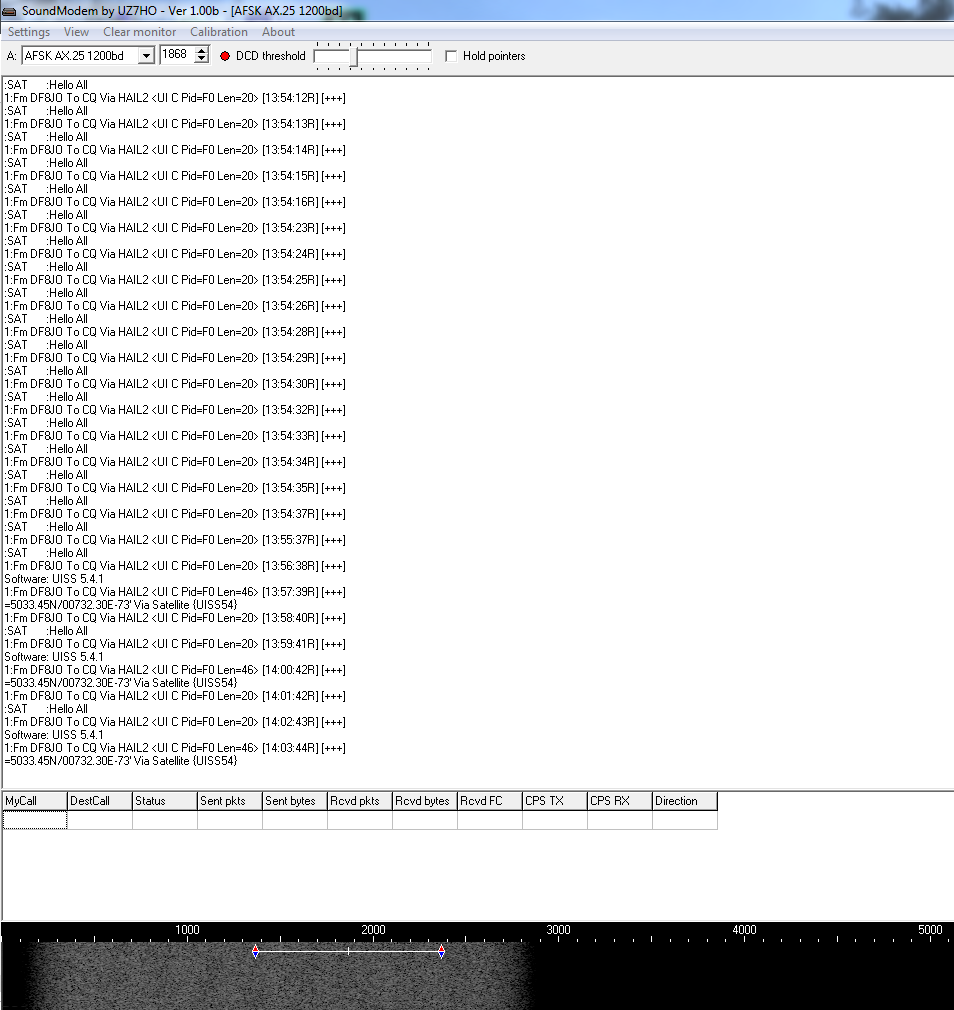
M0EYT and DF8JO sending Packet radio AX25 1k2 on Ehails2 *shout out to Chertsey club*
@AmsatUK @amsatdl @amsat #amsat #packet #ax25 #ehails2 @uhf_satcom playing packet radio m0EYT and df8JO @MakExpOp cheers for the shout ! pic.twitter.com/a8y7TMfon2— Arow Antena (@arrowantenna) February 25, 2019
Saturday, 23 February 2019
MARCONIssta call to power stickers and thank you note for taking part
@TUBerlin @RF2Space @ISS_Ham_Radio @AmsatUK @amsat #marconissta thanks to Martin @dj1mbb for the stickers and letter today great motivation for the club @MakExpOp cheers and best 73 from the UK pic.twitter.com/Hykw94Qefm— Arow Antena (@arrowantenna) February 23, 2019
Martin DJ1MBB kindly send us some stickers and a nice letter to thank us for sending a carrier on UHF at the ISS as it flew over the UK. This helped them track and record data needed for their project.
Monday, 18 February 2019
M0EYT on qo-100 ehails2
SSTV martin 1
using mmsstv
Software available from https://digilander.libero.it/i2phd/spectran.html
using virtual audio and the qo-100 narrow band web sdr


Qatar OSCAR-100 decoding narrow band upper beacon from the websdr.
Access the narrow band web based sdr here: https://eshail.batc.org.uk/nb/
Download software decoder here http://www.moetronix.com/ae4jy/ao40rcv.htm
Install virtual audio cable:
https://chertseyradioclub.blogspot.com/2018/05/download-and-install-vb-audio-virtual.html
Ensure to click on *click here to start sound*
Select upper beacon preset
open AO40Rcv software
(Sound from websdr should pipe to AO40 decoder)
Allow to run for some time as the beacon is not always transmitting
Download software decoder here http://www.moetronix.com/ae4jy/ao40rcv.htm
Install virtual audio cable:
https://chertseyradioclub.blogspot.com/2018/05/download-and-install-vb-audio-virtual.html
Ensure to click on *click here to start sound*
Select upper beacon preset
open AO40Rcv software
(Sound from websdr should pipe to AO40 decoder)
Allow to run for some time as the beacon is not always transmitting
Sunday, 17 February 2019
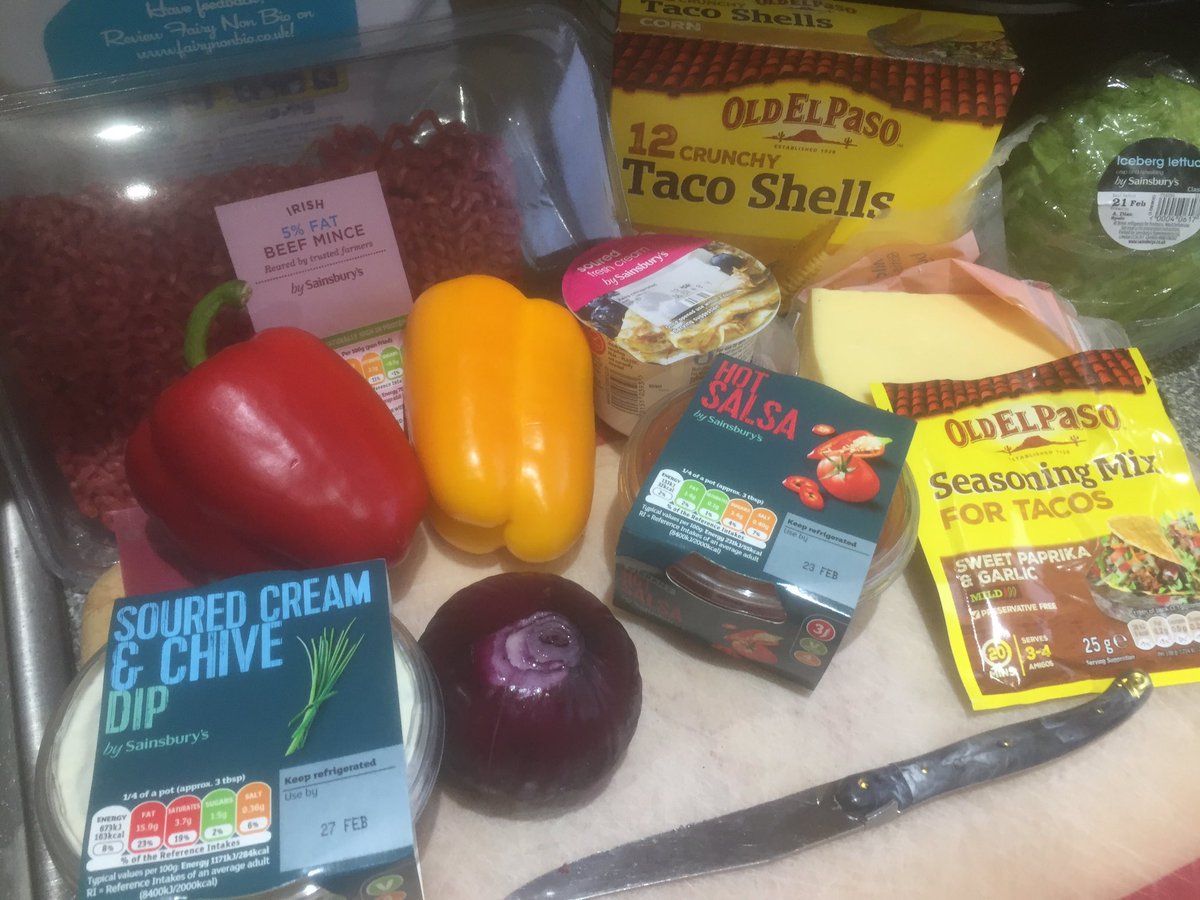
(Cooking) Taco's
Mince, onion, 2 peppers, taco mix, taco shells, cheese, lettuce, salsa, sour cream
Dice up the peppa and onion
Fry up the mince, drain any water / fat off
Add the peppa and the onion
Mix and continue to cook until the peppa and onion is reduced
Grate the cheese, and shred the lettuce
For the kids (or non spice lovers) split the mince and veg between 2 pans, add taco mix to one pan
Mix thoroughly
Place the taco shells in a preheated oven (180 fan) for 5 minutes
Serve up in bowls with plates and get your hand dirty and enjoy.
Subscribe to:
Posts (Atom)